Junior High Age School Students Build Robot In Technology, Engineering Class.

A Shared Struggle for Control

Some years ago, a graduate student who was a counselor at a group home for troubled teenagers, told his professor, Dr. Bergin, that a serious fight had broken out at the group home one evening over something trivial like who was going to take a shower. The police were called and arrived, fully armed, and “threatened” the kids that they would be taken to jail if their behavior didn’t change.

Moving Beyond Threats and Bribes

The kids’ response was “so what, no big deal.”  The staff had used their biggest threat, and it didn’t work because the teens were desensitized to threats. The counselor asked Dr. Bergin “how do you de-escalate teens’ expectations of threats and get them to respond to a request without threats or bribes?”

Around the same time, a director of a Head Start program for 3-5 year-olds told Dr. Bergin that they were having to expel preschoolers for disruptive behavior. She asked what strategies would help her staff manage the children’s behavior.

A Common Question and a Practical Answer

Both groups – teachers/counselors of preschoolers and teenagers – had the same question: “How do you foster prosocial behavior, promote self-control rather than external control, and de-escalate kids’ expectations for coercion?

Drawing upon a 50-year history of research on child development, Dr. Bergin taught both groups four strategies that are practical, or “doable,” in busy classrooms from preschool through high school. While not exhaustive, carefully controlled studies show that these four strategies improve the climate of schools and promote the well-being of both students and teachers.

What Is Prosocial?
An Indigenous Navajo high school teacher with a group of students in a school classroom.
Teacher Helping Student In Elementary Classroom

Prosocial Development & Education Research Lab

The Prosocial Development & Education Research Lab at the University of Missouri conducts research on how adults help children become prosocial. 

We partner with other researchers, teachers, and agencies to provide professional development to teachers to implement the strategies that research suggests are effective.

Christi Crosby Bergin, Ph.D

Director

Christi Crosby Bergin (Ph.D. Stanford) is director of the Prosocial Development and Education Research Lab. She is Research Professor emerita at the University of Missouri, a research intensive flagship university. Dr. Bergin is an applied developmental psychologist with emphasis on prosocial development of children and teacher effectiveness. She is a leading expert in Prosocial Education, or how schools can help students become more respectful, caring and cooperative. She is co-founder of the Network for Educator Effectiveness (NEE), with over 285 member school districts. She was chair of the SEL SIG for AERA (2024-2025) and Associate Dean for Research and Innovation at MU (2019-2024). Federal agencies have entrusted her with over $62 million in research funding following competitive, rigorous scientific review. Dr. Bergin is an advocate for students and teachers, focusing on practical, dignity-affirming solutions.

Christi Bergin 2021 Web
Content
Designing a Prosocial Classroom

Christi Bergin | W. W. Norton & Company

View Book
Imageservlet
Child and Adolescent Development in Your Classroom: Topical Approach

Christi Bergin & David Bergin | Cengage

View Book
9780367495251 (1)
Social and Emotional Development in Children through Emerging Adults: A Guide for Professionals

Christi Bergin & Kimberly Gordon Biddle | Routledge

View Book

Our Staff

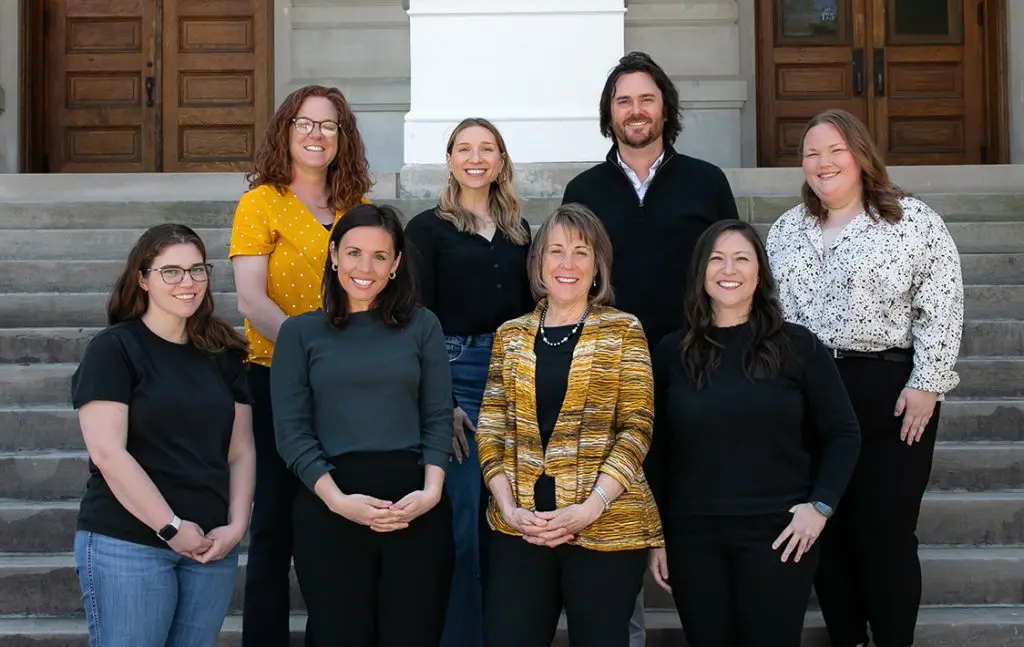
Prosocial Lab Group 2025 1 Crop 1024x647

Affiliated Organizations

  • Adroit Studios Gaming Lab at MU collaborated with our lab to produce a video game which assesses prosocial behavior in students- called “vSchool.” 
  • eMINTS co-designs and provides professional development with the Prosocial Development & Education Research Lab. 
  • American Institute for Research has served as an external, third-party research-evaluator on multiple projects conducted by our lab.
Adroit Logo
Emints Logo Color Gray Letters Prolearning
Nopath